


Chemical peels
Chemical peels are a great professional treatment for a number of skin concerns. From advanced ageing to acne and hyper pigmentation. Our chemical peels are suitable for different skin concerns and skin types. Peels are classified in different ways ranking in their strength and absorption rate.
OUR MEDICAL-GRADE
MediMD PEELS
BEST RESULTS
4-6 sessions

HOW OFTEN
Every 2 weeks

TREATMENT RECOVERY
Immediate

RISKS & COMPLICATIONS
Low

PROCEDURE TIME
30 mins
.png)
PRICE
From £75

Book a full course of 6 sessions and receive 10% off the total price.


Resurfacing medipeel
(Glycolic acid)
Medical-Grade Peel.
-
CLEARS AWAY DEAD SKIN CELLS AND UNCLOGS PORES
-
HELPS SMOOTH TEXTURE AND BRIGHTEN SKIN
-
PROMOTES COLLAGEN PRODUCTION AND CELLULAR TURNOVER
-
DECREASES VISIBILITY OF FINE LINES, WRINKLES AND ACNE SCARS
Who is it for?
-
Skin types: acne, combination, ageing, pigmentation and rosacea.
Prices
-
Face only: £75 (20%) / £95 (40%)
-
Course of 6: £405 (20%) / £513 (40%)


Rejuvenating medipeel
(Lactic acid)
Medical-Grade Peel.
-
SOOTHES THE SKIN & HELPS REDUCE REDNESS
-
PROVIDES INTENSE HYDRATION BY BIDING WATER TO SKIN CELLS
-
REDUCES VISIBLE SIGNS OF AGEING BY MINIMISING FINE LINES, WRINKLES SUPPORTING COLLAGEN PRODUCTION
-
BRIGHTENS DULL SKIN, EVENS SKIN TONE AND LEAVES THE COMPLEXION REJUVENATED
Who is it for?
-
Skin types: dry, dehydrated, sensitive, rosacea and pigmentation
Prices
-
Face only: £75 (20%) / £95 (50%)
-
Course of 6: £405 (20%) / £513 (50%)
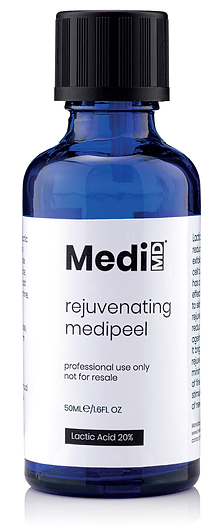

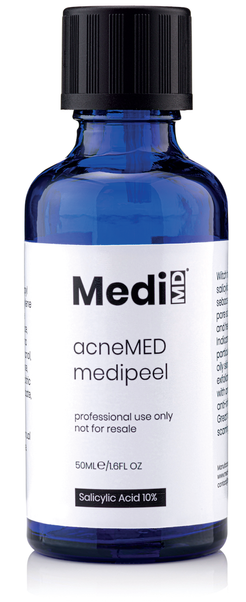
AcneMED medipeel
(Salicylic acid)
Medical-Grade Peel.
-
DEEPLY CLEANSES PORES TO REMOVE IMPURITIES
-
HELPS REGULATE EXCESS OIL PRODUCTION
-
IMPROVES OVERALL SKIN TEXTURE AND CLARITY
-
REDUCES INFLAMMATION AND PREVENTS BREAKOUT
Who is it for?
-
Skin types: acne, oily, congested, combination and P acnes bacteria.
Prices
-
Face only: £85
-
Course of 6: £459
Mandelic medipeel
(Mandelic acid)
Medical-Grade Peel.
-
PREPARES AND REFRESHES THE SKIN
-
BALANCES SEBUM PRODUCTION
-
EVENS SKIN TONE & REFINES PORES
-
REDUCES ACNE, FINE LINES AND WRINKLES
Who is it for?
-
Skin types: sensitive, oily or acne-prone skin, uneven or pigmented skin tones and all Fitzpatrick skin types (including darker tones).
Prices
-
Face only: £85
-
Course of 6: £459

Jessner medipeel
(Kojic, Glycolic, Lactic acid)
Medical-Grade Peel.
-
TARGETS HYPERPIGMENTATION CAUSED BY ACNE, AGE SPOTS AND MELASMA
-
IMPROVES OVERALL SKIN TEXTURE AND RADIANCE
-
STIMULATES COLLAGEN PRODUCTION TO REDUCE FINE LINES AND WRINKLES
-
HELPS BALANCE SKIN BY UNCLOGGING PORES AND REDUCING INFLAMMATION
Who is it for?
-
Skin types: pigmentation, ageing, sun damaged and acne.
Prices
-
Face only: £110
-
Course of 6: £594

TCA medipeel
(Trichloroacetic acid)
Medical-Grade Peel.
-
ADDRESSES UNEVEN SKIN TONE AND DISCOLORATION
-
HELPS EVEN OUT TEXTURE ISSUES
-
IMPROVES AND LIFTS SAGGING SKIN
-
TARGETS DEEP WRINKLES & SCARS
Who is it for?
-
Skin types: pigmentation, ageing and acne scarring
Prices
-
Face only: £130
-
Course of 6: £702

OUR FULL GLOW BeautyLab® PEEL
BEST RESULTS
6 sessions
HOW OFTEN
Every 7 days
TREATMENT RECOVERY
Immediate
RISKS & COMPLICATIONS
Low
PROCEDURE TIME
30 mins
PRICE
£60 - £80
Book a full course of 6 sessions and receive 10% off the total price.
BeautyLab® Glycolic peel
(Glycolic, Salicylic acid & Pomegranate enzyme)
(10%, 20% & 30%)
Our BeautyLab® Chemical Peel combines the power of glycolic acid, salicylic acid, and pomegranate enzyme to exfoliate and renew your skin. Glycolic acid works to resurface and smooth the skin, while salicylic acid helps to deeply cleanse pores and target acne. The pomegranate enzyme gently removes dead skin cells, leaving your complexion brighter and more even-toned. This potent combination works together to reveal healthier, glowing skin with minimal downtime.
Who is it for?
-
Skin types: all skin types
Prices
BeautyLab® Glycolic Peel (10% / 20% / 30%)
-
Face only: £60 / £70 / £80
-
Course of 6: £324 / £378 / £432

HOW IT WORKS
Restored confidence is just a few steps away.
.png)
BOOK YOUR CONSULTATION
Reach out below to select the best day and time for us to assess your skin and get this party started
.png)
WE'LL CREATE YOUR PERSONALISED SKIN BLEND
Based on your skin type, concerns and goals, we’ll create a treatment plan that focuses on safety and results.
GET READY FOR THE RESULT
No matter the length of your plan, we’ll work together to achieve ultimate skin goals.

Chemical Peel Overview
Most of us are familiar with mechanical exfoliation; using facial scrubs, abrasive mitts, or cleansing brushes to remove dull surface skin cells.
When done properly and regularly, exfoliation eliminates the layer of dead cells on the skin’s surface, revealing fresh, new skin beneath. This not only brightens the complexion but also allows skincare products to penetrate more deeply, enhancing their effectiveness.
Chemical peels offer a more intensive approach to exfoliation, often referred to as chemiexfoliation. They work by using acids of varying types and strengths to dissolve the outer layers of dead skin, unveiling smoother, softer, and more even-toned skin. The depth of the peel depends on the specific acid used and its concentration.

Superficial and medium chemical peels target different depths of the skin. Superficial peels are the gentlest, removing only the outermost layer of the epidermis. Mild enough for monthly use, they help diminish fine lines, fade age spots, and improve overall skin texture and tone.Superficial and medium chemical peels target different depths of the skin. Superficial peels are the gentlest, removing only the outermost layer of the epidermis. Mild enough for monthly use, they help diminish fine lines, fade age spots, and improve overall skin texture and tone.
Who are superficial Chemical Peels good for?
Superficial chemical peels are safe and effective for all skin types and tones. If you have uneven skin, blemishes, fine lines, sun damaged and blemished skin, a superficial chemical peel may help. They can be used anywhere on the face, neck and body, and while they are most commonly used on the face, they are also a good option for those prone to acne on their chest and back. They are used to: -Smooth skin -Reduce blemishes -Reduce pigmentation -Reduce the appearance of fine lines -Improve the appearance of age spots -Reduce the appearance of acne scarring You may not be suitable for a chemical peel if you: -are pregnant or breastfeeding -have a history of problems with skin scarring, particularly keloid scarring -have certain skin pigment issues, lesions or moles. These must be checked by a GP or dermatologist first. -have facial warts or a facial skin infection -have used prescription acne treatments such as isotretinoin -have darkly pigmented skin (due to the heightened risk of hyperpigmentation) -have had any other abrasive treatment, including home care treatments -have recently exfoliated, shaved or waxed the area You must inform your practitioner of all creams or facial products you have used.
How do you prepare for a Chemical Peel?
-
It is important the client does not use any AHA based acids 24 hours before the treatment.
-
Any retinol products should not be used for at least 1 week before a course of peel treatments.
-
1-2 weeks prior to your treatment, avoid adding anything new to your skincare routine. Specifically, avoid exfoliatingfacials, facial electrolysis and sunbathing/sunbed use.
-
Avoid any laser treatment for at least six weeks pre and post peel as a precautionary measure.
-
Avoid any waxing treatments and whitening or bleaching facial products before and after the treatment.
What should you do following a Chemical Peel?
It is very important that you carefully follow the advice of your practitioner following a peel treatment to help improve the benefit of the procedure and reduce the risk of complications or side effects.
-
Following your chemical peel treatment, you should cleanse your face very gently with a soap-free cleanser, patting the skin dry with a towel. Ensure you moisturise your skin well.
-
Wear a high SPF sunscreen for at least 6 weeks post-treatment. This will reduce the risk of brown blotches (hyperpigmentation) forming on your skin.
-
No heat treatments, exfoliation treatments, sun beds or direct sun exposure.
-
No make up for 48 hours, avoid swimming and saunas.
-
The client should not use any AHA based skincare products. We recommend the client use the MediMD / BeautyLab® aftercare kit.
-
The client must not have any facial treatments such as microneedling, dermaplaning or microdermabrasion for at least a week.
-
2-4 days after your treatment you may experience peeling – though not everyone does. DO NOT pick or peel your skin. If you do, you risk bleeding, discolouration and even scarring.
-
Problematic skin conditions may need prolonged treatment program.
Treatment cycles, areas and add-ons
MediMD Chemical peel
-
Recommended treatment cycles are 4 - 6 sessions with 2 weeks apart.
-
Maintenance sessions are recommended 4 times per year.
The skin cells turn over and build up every 28 - 40 days depending on age a standard maintenance procedure is recommended every 4 - 6 weeks for optimum skin health.
BeautyLab® Chemical peel
-
Recommended treatment cycles are 6 sessions every 7-10 days.
-
Maintenance sessions are recommended once a month.
All peels can be tailored for face, neck and décolleté. Additional body areas can be treated as incremental add-ons, typically £30–£50 per area depending on size. This allows each course to be fully customised to your skin concerns and goals.
What are the side effects and risks of chemical peels
-
You may experience slight white discolouration in some areas or blotchy skin, though this should subside within a few hours.
-
You may experience peeling 2-4 days after your treatment.
-
Hyperpigmentation (brown spots on the skin) may occur with all peels, especially if your skin is darker. To reduce the chance of this, it is important to use creams as directed by your practitioner. This should include a high factor sunscreen daily.
-
It is important to avoid direct sun exposure for 6 weeks post-peel.
-
Cold sores – if you are susceptible to cold sores, you may find you have an outbreak after a chemical peel. To help prevent this, taking a course of antiviral medicine as advised by your practitioner beforehand may be advised.
-
Redness – sometimes skin redness persists for more than 2-3 months, but this usually disappears in time.
THE FITZPATRICK SCALE
Which skin tone are you?
.png)
BUT WAIT, THERE'S MORE!
Because who doesn’t love a good add-on?
.png)
ACNE BACK PEEL
Similar to our acne facial peels, our back peels target hard-to-reach areas with customised acid concentrations to help heal acne, reduce scars and fade hyperpigmentation for even better results.
.png)
EXTRACTIONS
While our recommended skincare products are strong in their own right, extractions can help clear out those pesky pores to help reduce blackheads and blemishes.
.png)
DERMAPLANING
Say hello to skin that's never felt so smooth. Let's even your skin tone and texture with a gentle blade to take away any dead skin and wispy facial hair.

FLEXIBLE PAYMENT OPTIONS
For your perfect treatment packages.
*For inquiries regarding flexible payment options for individual treatments, please contact the clinic directly.